Rewasa · Sikar · Rajasthan

Yatra to the Jeen Mata Mandir

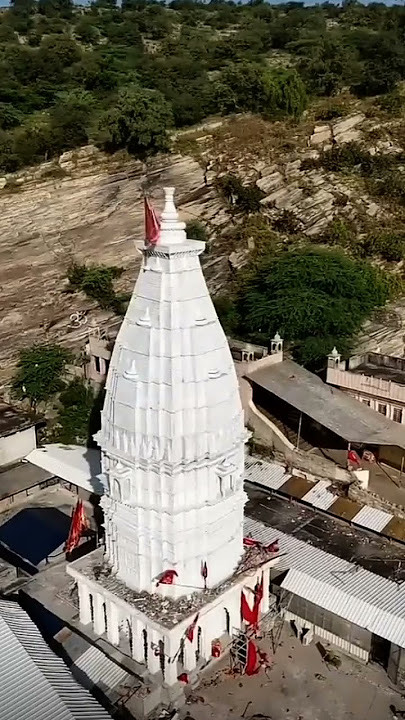
A white shikhar rising against a bare Aravalli hillside, flags snapping in the desert wind, and the sound of bhajans drifting out of the courtyard — this is what greets pilgrims at Rewasa. This guide brings together everything you need to plan your darshan: routes, the festival calendar, temple etiquette and what to carry.

Aerial view of the white, carved shikhar of the Jeen Mata temple with red flags, set against the rocky, tree-dotted Aravalli hillside
The shikhar of the Jeen Mata temple against the Aravalli slope.
LocationNear Rewasa village, Sikar district, Rajasthan
From SikarAbout 29 km south by road
From JaipurAbout 115 km north-west by road
Big festivalsChaitra & Ashwin Navratri melas

How to Reach

Getting to Rewasa by road, rail and air

The temple lies in the Aravalli hills south of Sikar, in the heart of the Shekhawati region. Distances below are approximate road distances and may vary by route; please check a live map before you travel.

By road

Road is the most convenient way to reach the temple. Taxis and buses run from Sikar city, and private cars can drive right up to the parking area near the temple.

  • Sikar — about 29 km
  • Jaipur — about 115 km via Ringas / Sikar route
  • Delhi — roughly 300 km via Jaipur or via Jhunjhunu–Sikar

By rail

Sikar Junction is the main railhead, with connections to Jaipur, Delhi and other cities. Ringas Junction, on the Jaipur side, is also commonly used by pilgrims.

From either station, take a taxi or local bus to the temple. During Navratri, extra local transport is usually available.

By air

Jaipur International Airport is the nearest major airport, with domestic and international flights.

From Jaipur, the drive to Rewasa usually takes around two and a half to three hours depending on traffic and route.

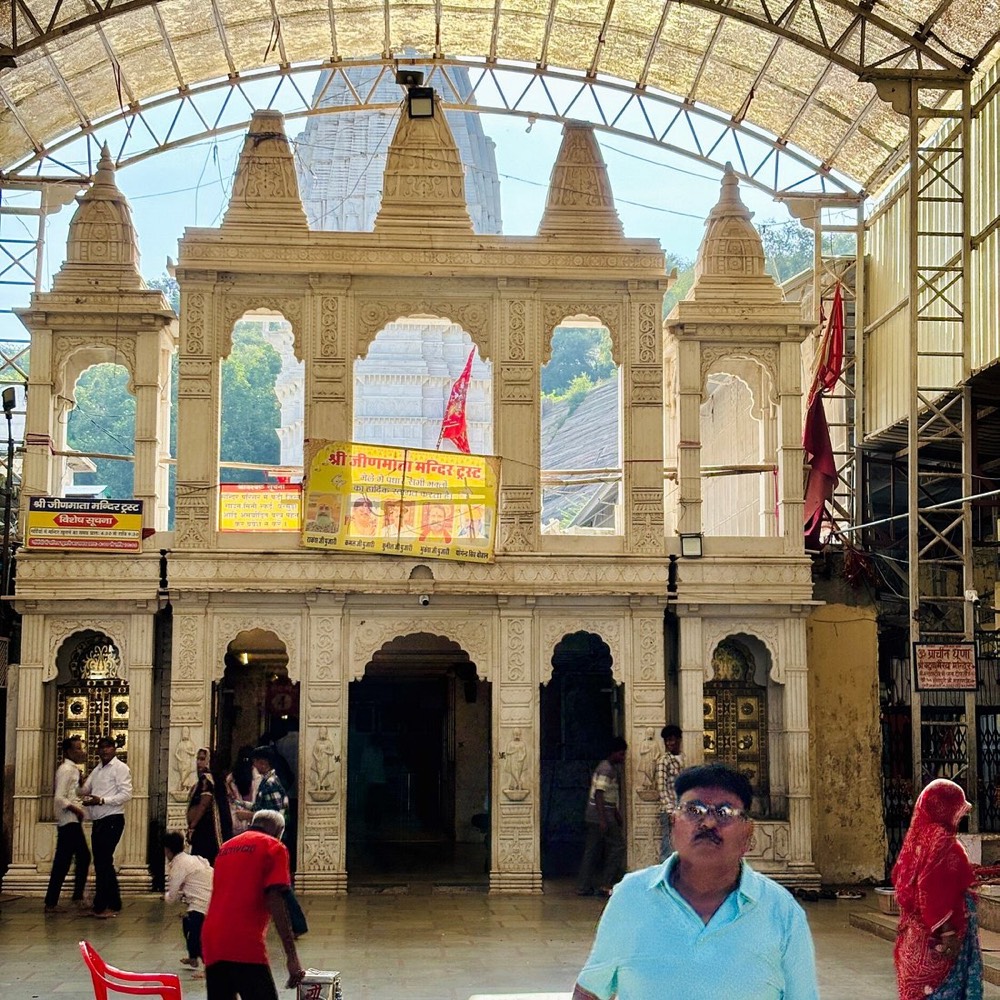
The carved cream-stone entrance gateway of the Shri Jeen Mata Mandir Trust temple, with domed pavilions, a saffron flag, a yellow trust banner and devotees in the courtyard under a curved canopy
The carved entrance gateway of the temple complex, with the white shikhar visible beyond.

Inside the Complex

From the gateway to the garbhagriha

Pilgrims enter through a carved stone gateway with small domed pavilions (chhatris), arches and lattice work in the Rajasthani style. A large covered canopy shades the courtyard, which is especially welcome in the fierce Shekhawati summer and during the crowded Navratri days. Banners of the temple trust announce festivals and arrangements.

Beyond the gate, the path leads towards the main shrine beneath the white shikhar. Queues for darshan are organised with barriers during busy periods. Inside, the Mother sits in a sanctum framed by silver- and gold-plated doors, wearing that day’s shringar of chunari, garlands and ornaments. Most devotees offer a coconut, chunari, sweets and flowers, bought from the stalls along the approach road.

Take a moment after darshan to sit in the courtyard. On most days you will hear a bhajan mandali or a family singing — and you are welcome to join in. Our dhun bhajans are easy to pick up on the spot.
Festival Calendar

When to visit

Exact dates follow the Hindu lunar calendar and change every year. Check a current panchang or the temple trust’s announcements before travelling.

March – April

Chaitra Navratri Mela

The spring Navratri brings one of the region’s largest fairs. Expect long queues, padyatris on the roads and bhajans day and night.

September – October

Ashwin (Sharad) Navratri

The autumn Navratri is equally grand, with akhand jyot, jagrans and kanya pujan on Ashtami and Navami.

October – March

Best weather

Cool, dry days make winter the most comfortable season for families, elders and children.

April – June

Summer caution

Temperatures in Shekhawati can be very high. Plan darshan for early morning or evening and carry water.

Darshan Etiquette & Tips

A respectful and comfortable visit

  • Dress modestly; many women cover their heads inside the shrine, and men may wear a cap or scarf.
  • Remove footwear at the designated stands before entering the temple area.
  • Photography inside the sanctum may be restricted — always follow the instructions of temple staff.
  • Buy offerings (chunari, coconut, prasad) from stalls near the temple to avoid carrying heavy loads.
  • During Navratri, arrive very early in the morning to reduce waiting time in the queue.
  • Keep elders and children hydrated, and carry a cap or umbrella for the sun.
  • Keep valuables secure in crowds and agree a meeting point with your group.
  • Do not litter; take plastic and flower wrappers back with you or use the bins provided.
  • Sing softly in the sanctum queue, and save louder bhajans for the courtyard and mandali areas.
  • Respect the queue system and the instructions of volunteers and police during melas.

Nearby Pilgrimages

Make it a Shekhawati darshan circuit

Sikar district and its neighbours are rich in sacred sites. Many pilgrims combine Jeen Mata’s darshan with visits to these places.

PlaceWhy visitConnection to Jeen Mata
Harshnath Temple, Harsh ParvatAncient Shiva temple ruins and panoramic views from a high Aravalli hill near Sikar.Associated with Harsh, Jeen Mata’s brother, in the folk tradition.
Khatu Shyam JiOne of Rajasthan’s most visited temples, dedicated to Shri Shyam (Barbarika).Lies in Sikar district; pilgrims often visit both on the same trip.
Salasar BalajiFamous Hanuman temple in neighbouring Churu district.A popular addition to a Shekhawati pilgrimage circuit.
Shekhawati havelisPainted merchant mansions in towns such as Fatehpur, Mandawa, Nawalgarh and Ramgarh.Built by the Marwari families who have long been devotees of Jeen Mata.

Map

Find the Jeen Mata temple

Before you leave, learn a few bhajans to sing on the way — the padyatra song Chalo Re Bhagto, Rewasa Dham is a favourite — and read the katha so that every corner of the temple speaks to you.