Dholak
The double-headed hand drum that drives almost every bhajan. Its bass and treble sides carry the Keherwa and Dadra rhythms.
Bhajan Sandhya · Jagran · Chowki
A bhajan sandhya is where the Mother’s songs come alive — a circle of voices, a dholak keeping time, a lamp burning before her image, and hands raised as the refrain returns. Whether it is a two-hour evening in your living room or an all-night jagran for the whole mohalla, this guide shows you how to bring it together.
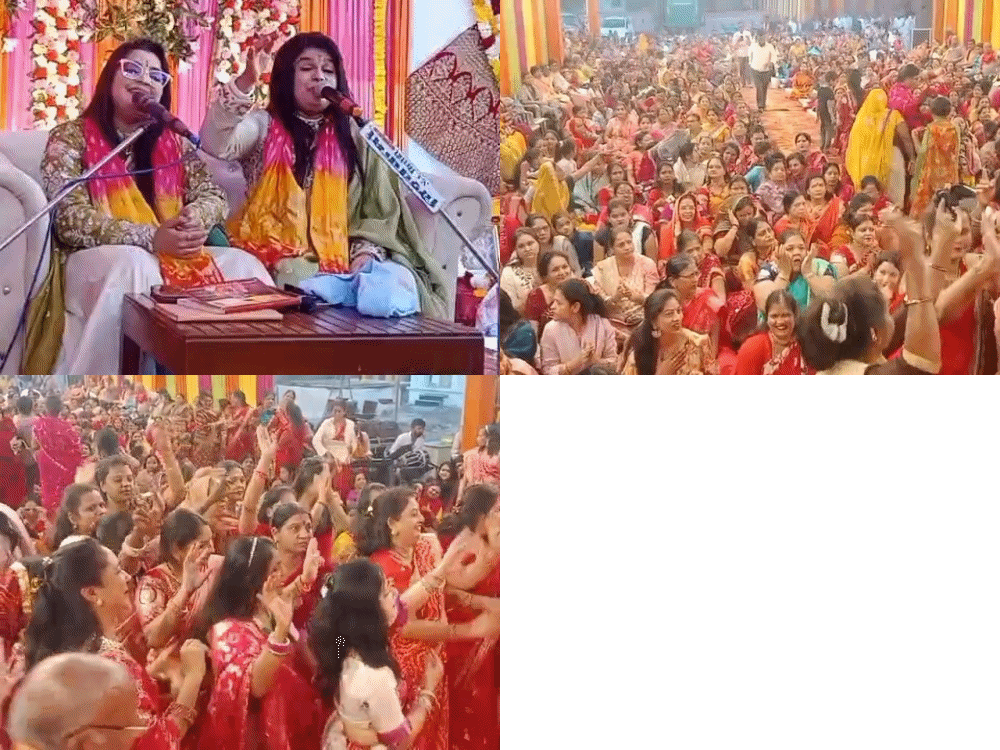
Sandhya, Chowki and Jagran
Bhajan sandhya literally means “an evening of bhajans”. It usually begins around dusk and lasts two to four hours, ending with the aarti and prasad. It is the most common format for birthdays, house-warmings, anniversaries, Navratri evenings and monthly satsangs, and it suits families with children and elders.
Mata ki chowki is a slightly more formal gathering in which a decorated seat (chowki) is set up for the Mother, often with a framed picture of Jeen Mata, a kalash, and a lamp. Many families invite a bhajan mandali (a group of singers and musicians) to lead it. A chowki typically lasts three to five hours.
Jagran means “staying awake”. In a Jeen Mata jagran, devotees sing through the entire night, from late evening until dawn, keeping the akhand jyot burning and the music unbroken. It is usually held for a vow (mannat) fulfilled, during Navratri, or for an important family occasion, and is often a community event.
All three share the same spirit. The structure below is written for a full jagran; for a shorter sandhya, simply choose a few bhajans from each part and keep the order. The order matters: it is designed to build the energy of the gathering gradually, carry it through its peak, and bring it gently back to stillness.
Running Order
This running order follows the custom of many Rajasthani families and bhajan mandalis. Times are a guide for an all-night jagran beginning at 9 pm; adjust them to your gathering.
Prepare in advance: a clean raised platform with a red cloth, a framed image of Jeen Mata, a kalash with mango leaves and coconut, a ghee lamp for the akhand jyot, flowers, incense, roli and rice, a chunari, and prasad such as halwa, churma or sweets. Arrange carpets or durries for the sangat to sit on, and a small sound system if more than thirty people are expected.
Print copies of the bhajans or share a link to our Bhajan Sangrah so that everyone can sing along. Each bhajan card has a “Copy lyrics” button for easy sharing.
Place the kalash, light the akhand jyot, and offer tilak, flowers and chunari to the Mother.
Begin with a short prayer to Lord Ganesh, the remover of obstacles, as is customary for every auspicious event.
Sing “Maa Ki Chowki Saji Hai Pyari” to welcome the Mother and set the mood.
Praise songs such as “Rewasa Ri Rani” and “Chunari Laal Chadhaun”.
Tell the story through song: “Harsh Bhai Ki Laadli” and “Kajal Shikhar”. A short spoken katha may be added.
Sing the full Jeen Mata aarti and recite the chalisa once.
High-energy bhajans with dholak and chang: “Jagrata Hai Aaj”, “Bhanwron Wali” and Rajasthani lok songs.
Simple chants like “Jai Jeen Bhawani” keep the tired sangat together and focused.
As dawn breaks, slow to “Bhor Bhai Jeen Bhawani”.
Final aarti, the farewell bhajan “Vida Karo Maa”, kshama prarthana and distribution of prasad.
Instruments
You need nothing more than voices and clapping hands to sing for the Mother. But these traditional instruments give Jeen Mata bhajans their distinctive Rajasthani colour.
The double-headed hand drum that drives almost every bhajan. Its bass and treble sides carry the Keherwa and Dadra rhythms.
A large frame drum of Shekhawati, played with the hands and famous from Holi festivities. Its deep thump gives lok bhajans their folk swing.
Small brass cymbals that mark the beat with a bright ring. Even a child can play them, and they keep the whole group together.
The hand-pumped keyboard that carries the melody and the drone, usually played by the lead singer.
Pairs of wooden clappers from western Rajasthan that add crisp, rapid rhythms, especially in fast jagran bhajans.
The conch and bell belong to the aarti. They are sounded at the opening, at midnight and at dawn.
For Lead Singers
Before the first verse, sing the ter (refrain) twice and invite everyone to repeat it. Once they have it, they will follow you anywhere.
Pitch the bhajan where the average voice can reach the high notes without strain — usually lower than you think.
Start each bhajan at a relaxed pace and let the dholak gradually lift it. A sudden fast start leaves the group behind.
Sing a line and let the sangat answer. It keeps everyone involved and rests your voice through a long night.
Alternate Hindi bhajans with Rajasthani lok songs and simple dhuns so that guests from different backgrounds all feel at home.
A two-minute retelling of the katha before a katha geet makes the song far more moving for listeners.
Sip warm water, avoid very cold drinks, and share the lead with other singers through the night.
After the aarti, pause in silence before the next bhajan. Those quiet moments are often the most powerful of the night.
Write to us with your questions, or share the bhajans your family sings — we would love to add them to the sangrah.